Configuring Cisco Call Manager (Cisco Unified CM) connection to VoiceGuide
SIP Trunk Method
SIP Trunk is the appropriate approach for allowing multiple simultaneous calls to be routed between Cisco and VoiceGuide.
First a SIP Trunk must be set up, and then the Route to that SIP Trunk must be configured.
Create SIP Trunk
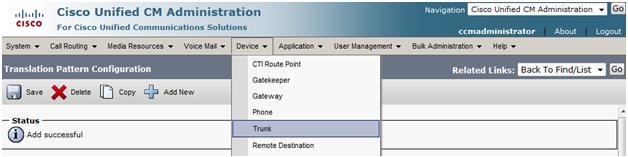
In Cisco Unified CM Administration select Device > Trunk from the top menu then click Add New to begin adding a new SIP trunk.
Set Trunk type to SIP Trunk
Set Device Protocol to SIP
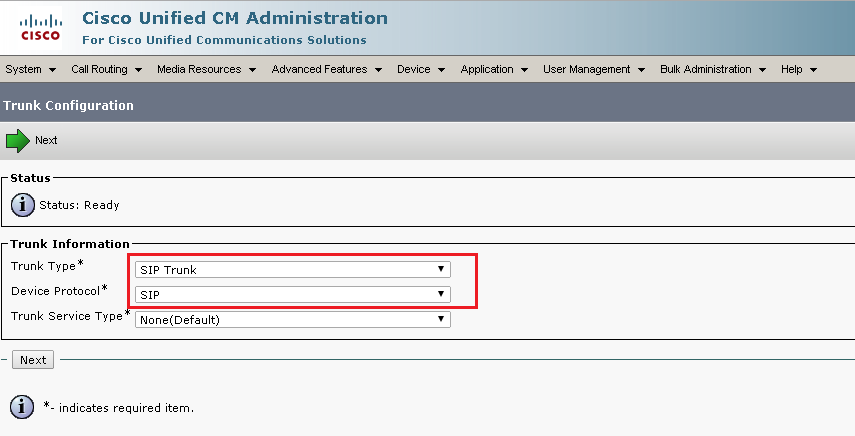
Then click Next to continue.
On the new screen enter Device Name and Description and select the Device Pool (Default is usually fine).
Also ensure that the Media Termination Point Required option is set.
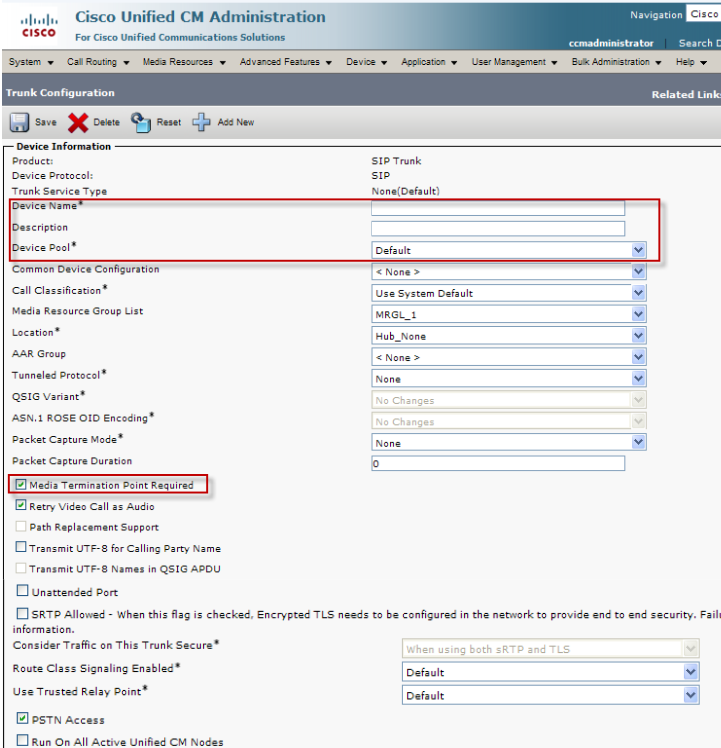
If transcoding is required then a Media Resource Group List needs to be selected as well.
In the SIP Information section set the following entries need to be set:
Destination Address : IP address of VoiceGuide IVR server
Destination Port : 5060
Preferred Codec : 711ulaw
Security Profile : Non Secure SIP
SIP Profile : Standard SIP Profile
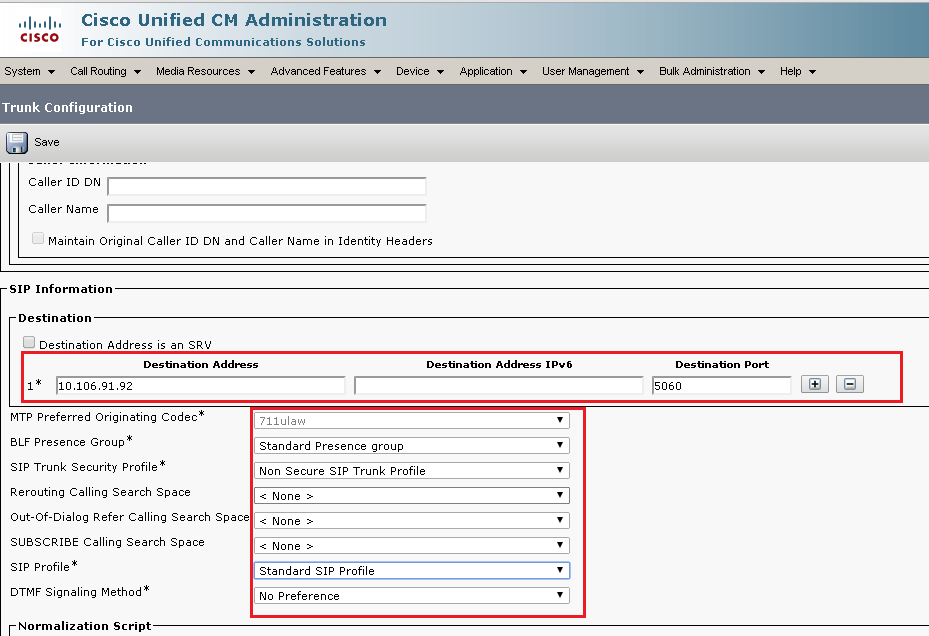
Preferred transport method is UDP
Click Save button at end of form and then click OK on the pop-up window to complete.
Create a Route Pattern to the SIP Trunk
Select Call Routing > Route/Hunt > Route Pattern then click Add New.
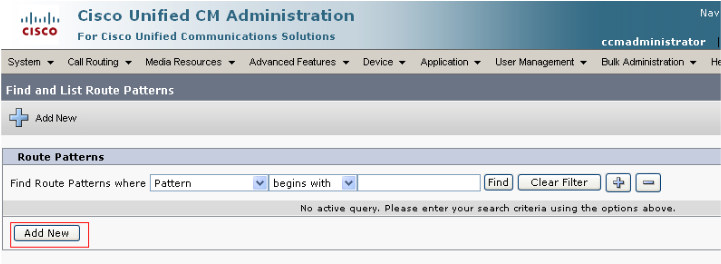
Then set the Route Pattern. eg. route pattern 2xx will cause all 3-digit calls beginning with “2” to be routed to the SIP Trunk.
The Gateway/Route should be set to the SIP Trunk that was just created previously.
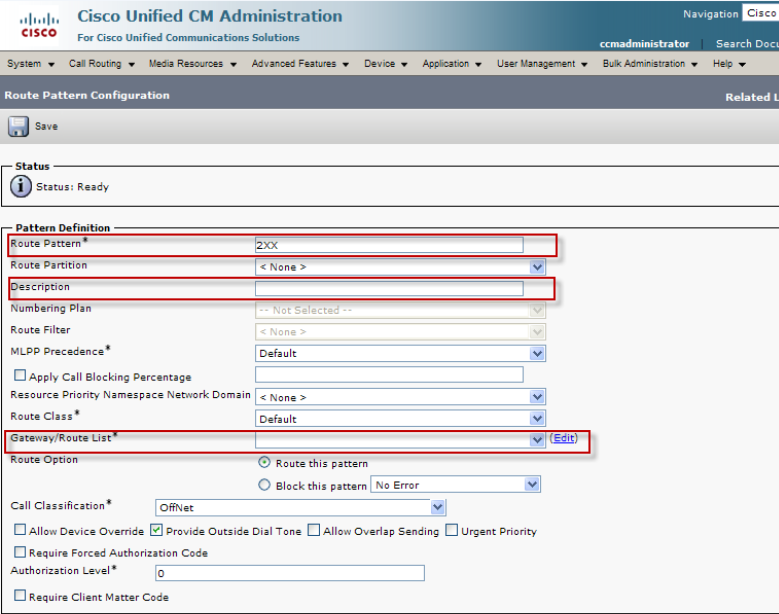
Click the Save icon at the top of the form and then click OK on the pop-up windows to complete.
SIP Device Method
If a small number of lines are connected to CUCM then a number of Users can be created on the CUCM and VoiceGuide can be set up to Digest Authenticate itself with CUCM to use these lines.
Setup a new Phone Security Profile in order to enable Digest Authentication for SIP devices:
Click on the System menu, open the Security sub-menu and select Phone Security Profile.
Click on the Add New button.
Set the Phone Security Profile Type to Third-party SIP Device (Basic) and click on Next
Provide a Name and a Description for this profile, e.g.: "Third-party SIP Device Basic - Digest Authentication". It is important to check the Enable Digest Authentication checkbox and click on Save
Now create a new user:
Select User Management > End User from the top menu then click Add New to begin adding a new User.
Enter all details including Digest Credentials
Select Device > Phone from the top menu then click Add New to begin adding a new Phone.
Set Phone Type to Third-party SIP Device (Basic) and click on Next
Set Phone Button Template to Third-party SIP Device(Basic)
Set User ID to the created user's name.
Scroll down to the bottom of the page and set the Protocol Specific Information:
Device security profile: Set it to the created profile
SIP Profile: Set it to Standard SIP Profile
Digest user: Select the created user
After the phone is created, the Phone Configuration page will show up.
On this page you can see that there is no Directory Number set for this phone.
Click on Line [1] - Add new DN to create a directory number
Provide a directory number, e.g.: 6001 and click on Save
After the Directory Number is created, you can assign the created Phone device to a specific End User.
To do so, click on End user at the User Management menu.
Click on Find to search for the created user.
Click on the user name to view its details
Scroll down the End User Configuration page and find the Device Information section. By default, no device is associated to this user. To associate a device to this user, click on Device Association
You will get to the User Device Association page. Click on Find to search for the created device
Select the previously created device by clicking on the checkbox before its device name and click on Save Selected/Changes
Now you need to go back to the user settings page. At the related links section you can choose which page you want to jump to. Select the Back to User option to step back to the user's settings and click on Go
At the End User Configuration page you can see the assigned device name at the Controlled Devices list. Click on Save to save the settings
Monitoring SIP Traffic
WireShark (www.wireshark.org) can be used to verify that SIP packets are arriving at VoiceGuide server.
To filter for SIP packets specify:
sip
in the WireShark's filter text box.
